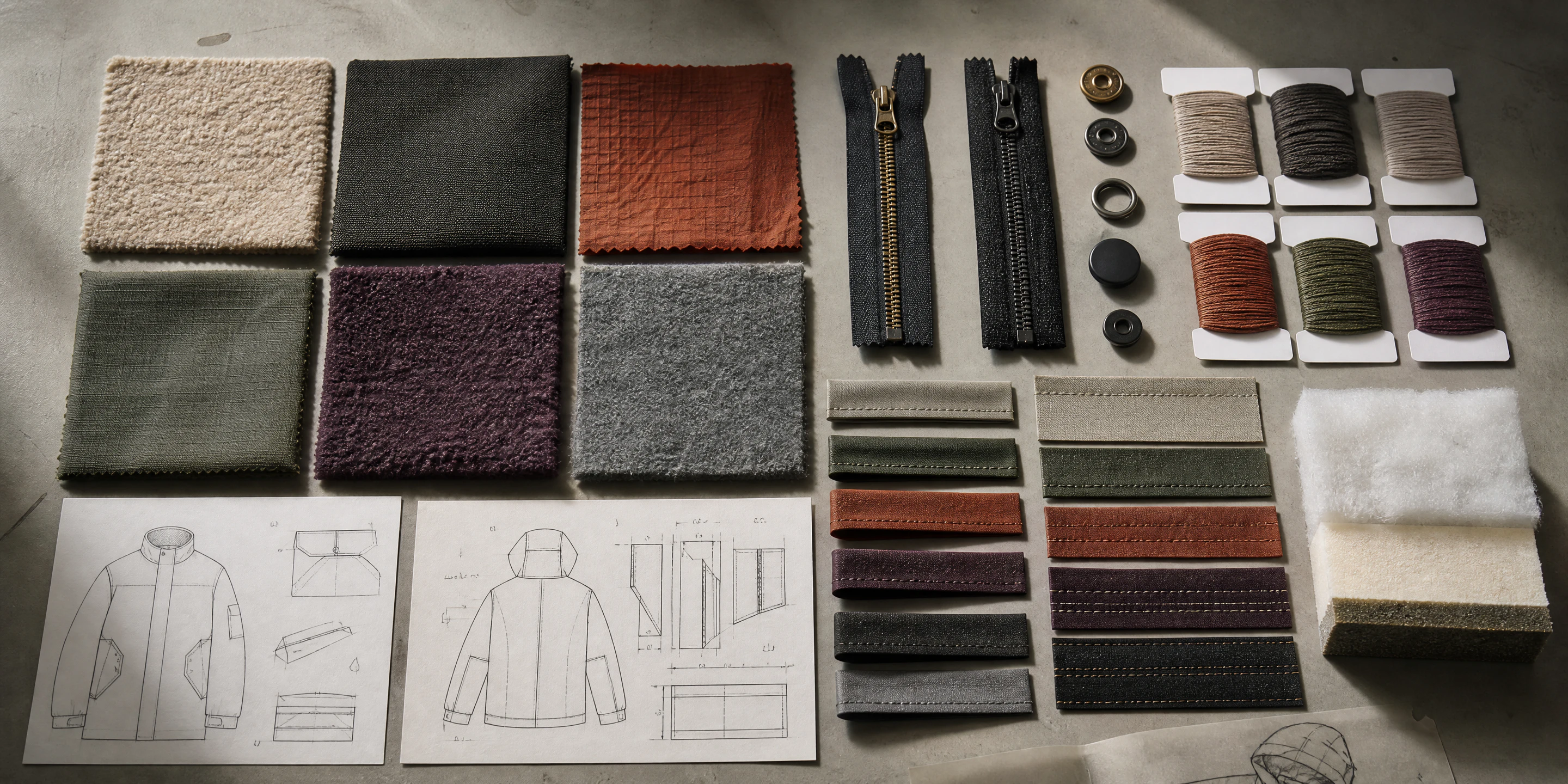
Introduction — Material, trim and construction should be evaluated as one product system rather
than three independent selections. A decision is useful only when it
supports the intended use and can be communicated for repeatable sampling.
Background — Hand feel, weight, care, performance,
color and availability affect both
user experience and the way
a product can be assembled.
Key Judgments — A suitable material is not sufficient if
the edge, seam, closure or reinforcement cannot
- support the
- intended use.
- Selection
- should
- therefore
test interfaces as well as individual components.
Working Method — Define use conditions first, compare material behavior, specify trim interfaces, then document the construction logic for sampling. Review candidate combinations against handling, care, appearance and the capabilities needed for assembly.
Common Risks — Visual selection without performance context, unnamed finishes and incompatible component choices create late-stage uncertainty. Risk also increases when a sample is approved
for appearance before cleaning, movement or repeated handling has been considered. Material chosen from appearance alone. Trim finish left unnamed. Closure
force mismatched to the base material. Seam or edge treatment selected without bulk review. Care requirements added after construction is fixed.
Practical Deliverables — Useful outputs include material and trim references, performance requirements, construction callouts and questions for supplier review. Decision Set Material reference Record composition direction, weight or hand, color, finish and the evidence still required. Trim reference Define component type, size, finish, color and the material
interface it must support. Construction map Connect seams, edges, closures and reinforcement to the stresses expected in use. Evaluation criteria State which handling, care, appearance and assembly observations will guide approval. Supplier questions Separate confirmed requirements from questions about availability, capability or alternative construction.
Next Article — Continue with a controlled method for reviewing prototypes and recording the decisions behind every
revision. The next note shows how evidence from a sample becomes actionable development direction.
Next Article
Methods for moving from product definition to supplier-ready execution.
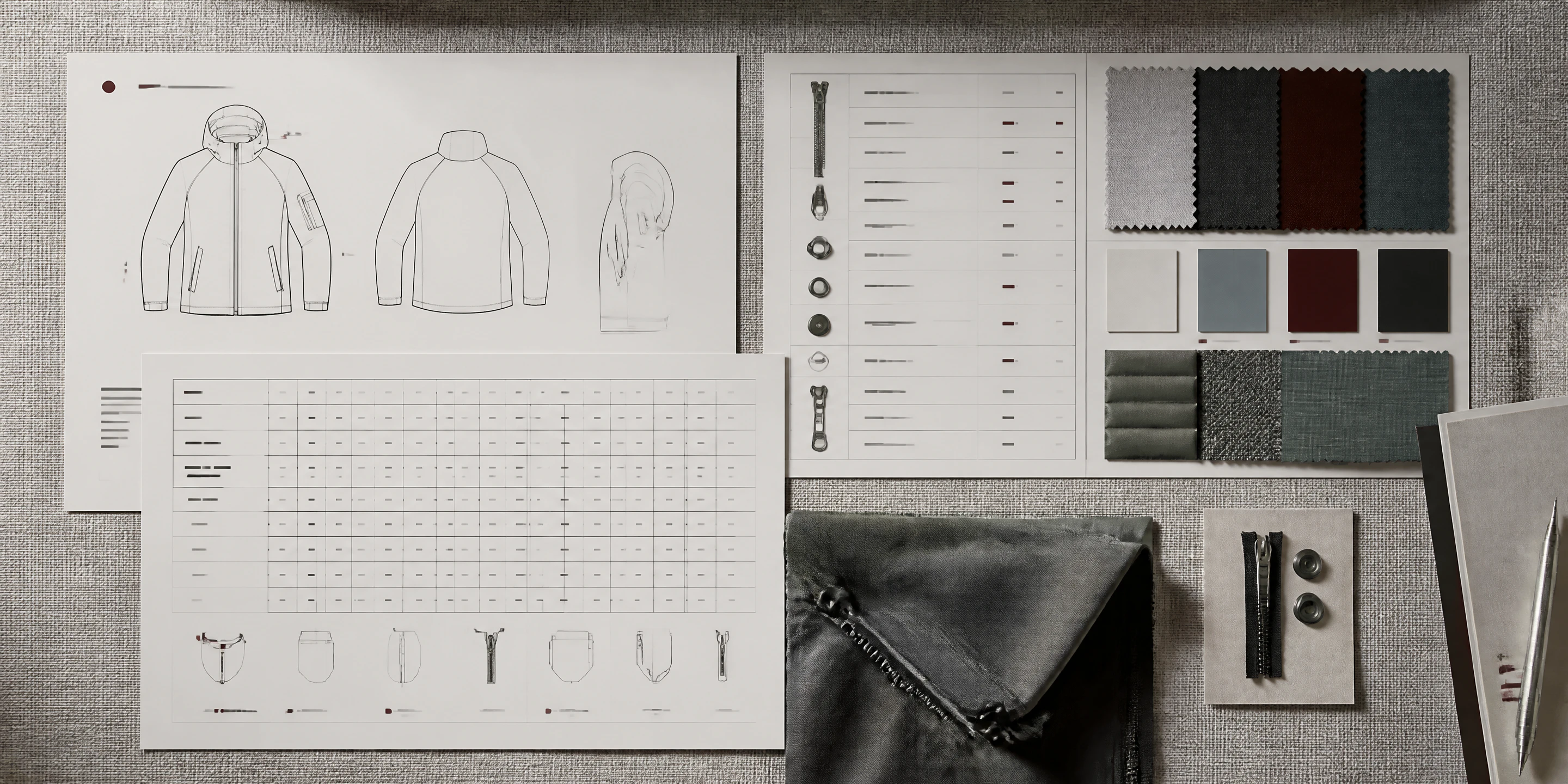
How approved product intent becomes controlled supplier information.

How prototype evidence supports clear and controlled development decisions.
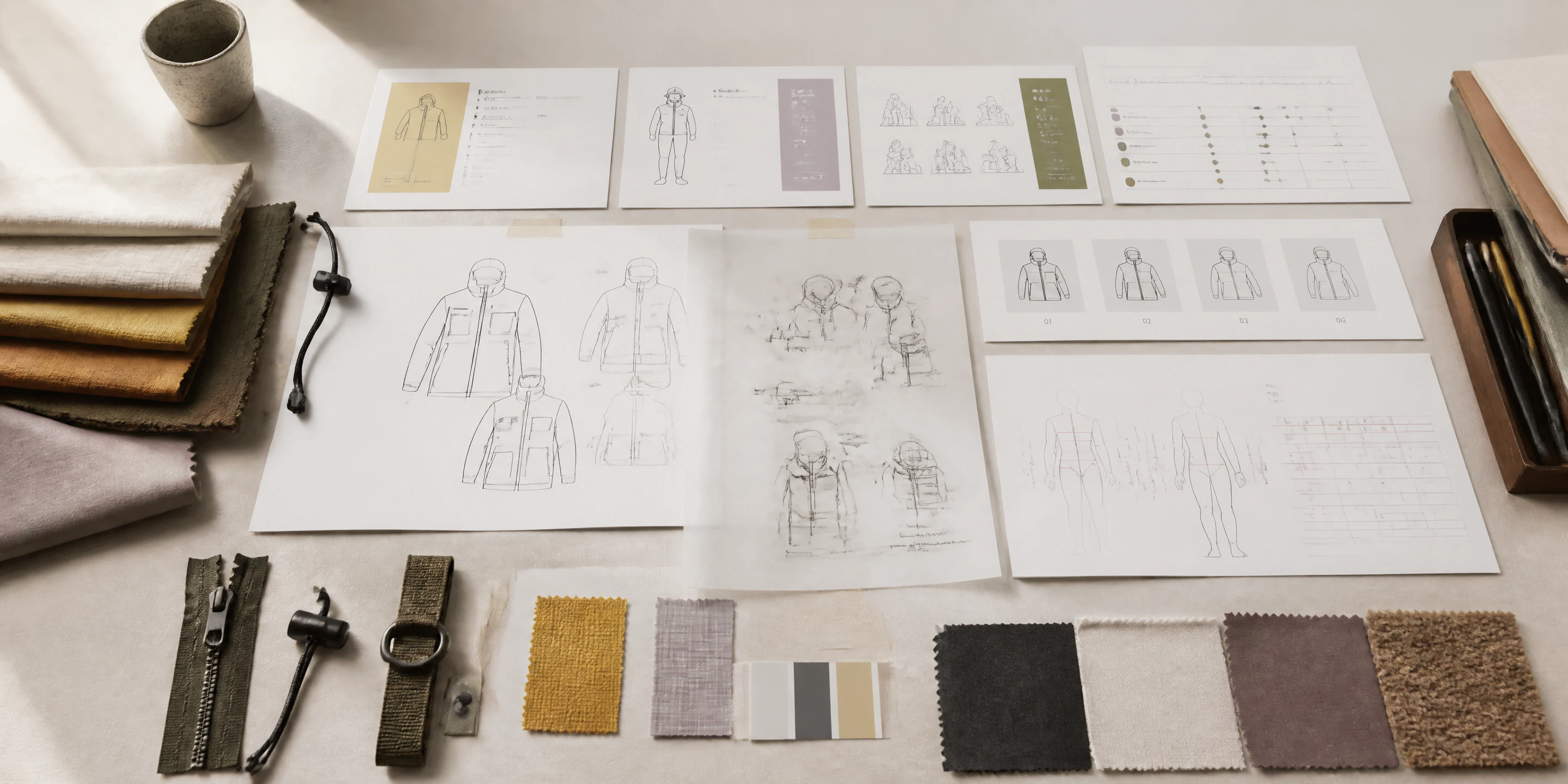
Practical methods for defining products, materials, construction and revisions.