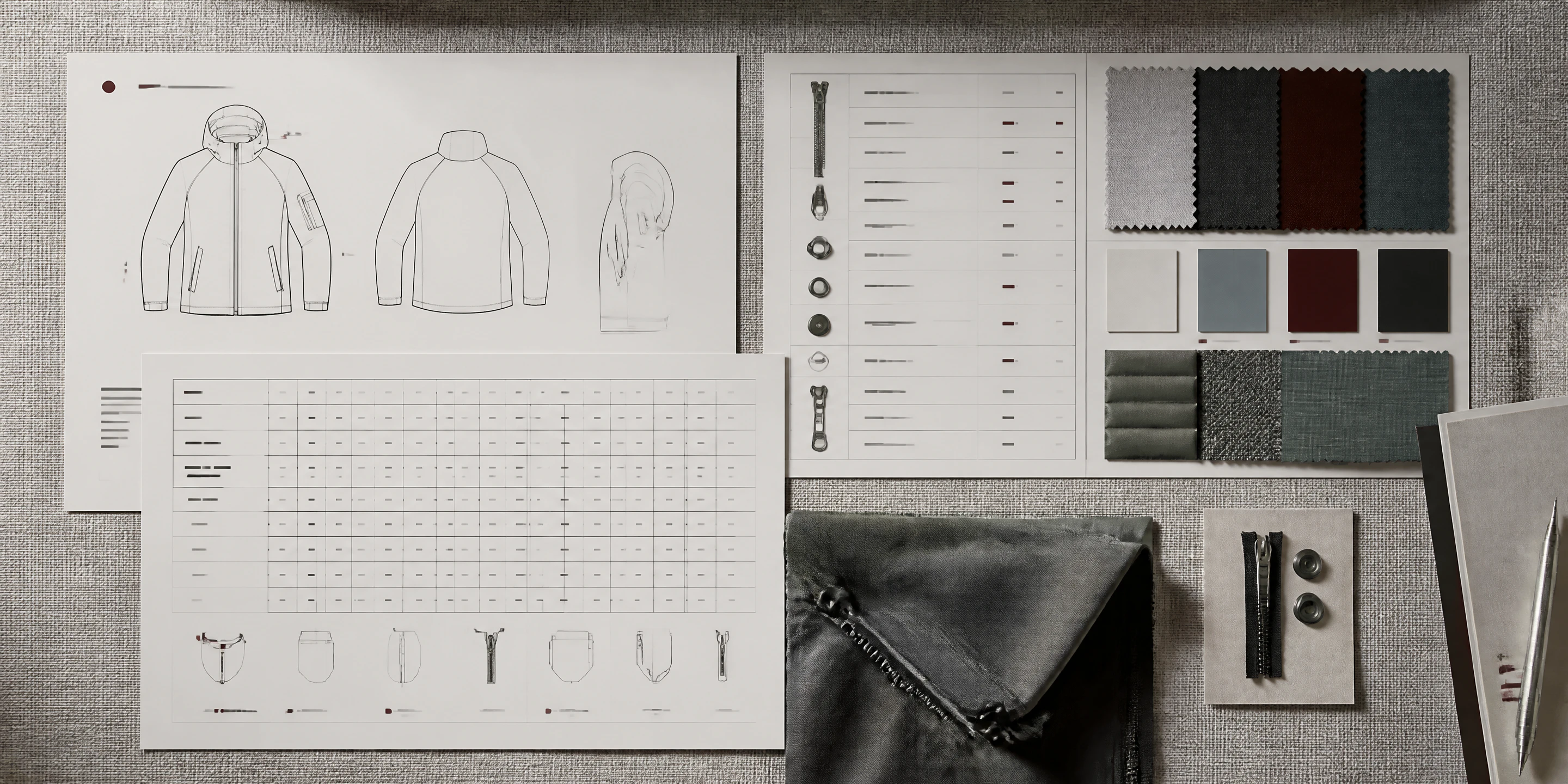
Introduction — A technical package converts approved product intent into controlled information a supplier
can quote, sample and review. Its purpose is not to create
more pages, but to reduce interpretation between design, development and production.
Background — Drawings alone rarely explain
dimensions, materials, construction, color,
artwork, components and
revision status together.
Key Judgments — Each requirement needs one clear source, while uncertain decisions
must be identified instead of presented as approved
- facts. Revision
- status must
- be obvious
- so
- an
obsolete instruction cannot compete with the current package.
Working Method — Organize product views, measurements, material references, construction notes, component controls and revision records in one hierarchy. Build the package from approved decisions, then check every callout against the sample question it is meant to answer.
Common Risks — Conflicting callouts, missing tolerances, uncontrolled files and ambiguous component names make sampling difficult to evaluate. A package also fails when
visual references imply requirements that the written specification does not confirm. Multiple uncontrolled file versions. Measurements without defined points.
Materials named without reference or performance intent. Construction notes detached from product views. Changes issued without a revision record.
Practical Deliverables — The deliverable is a versioned package with drawings, measurements, material and trim direction, construction details and review notes. Package Structure Product views Each relevant view identifies components, placement and the area governed by a callout. Measurement logic Points of measure, units, tolerances and size relationships are
defined consistently. Material control Material and trim references state identity, location, finish and unresolved approval needs. Construction control Seams, stitches, edges, reinforcement and assembly direction are tied to visible product areas. Revision control Every issue records what changed, why it changed and which source now governs.
Next Article — Continue with the decisions that connect material character, trim selection and buildable construction.
The next note treats these choices as one system rather than isolated selections.
Next Article
Methods for moving from product definition to supplier-ready execution.
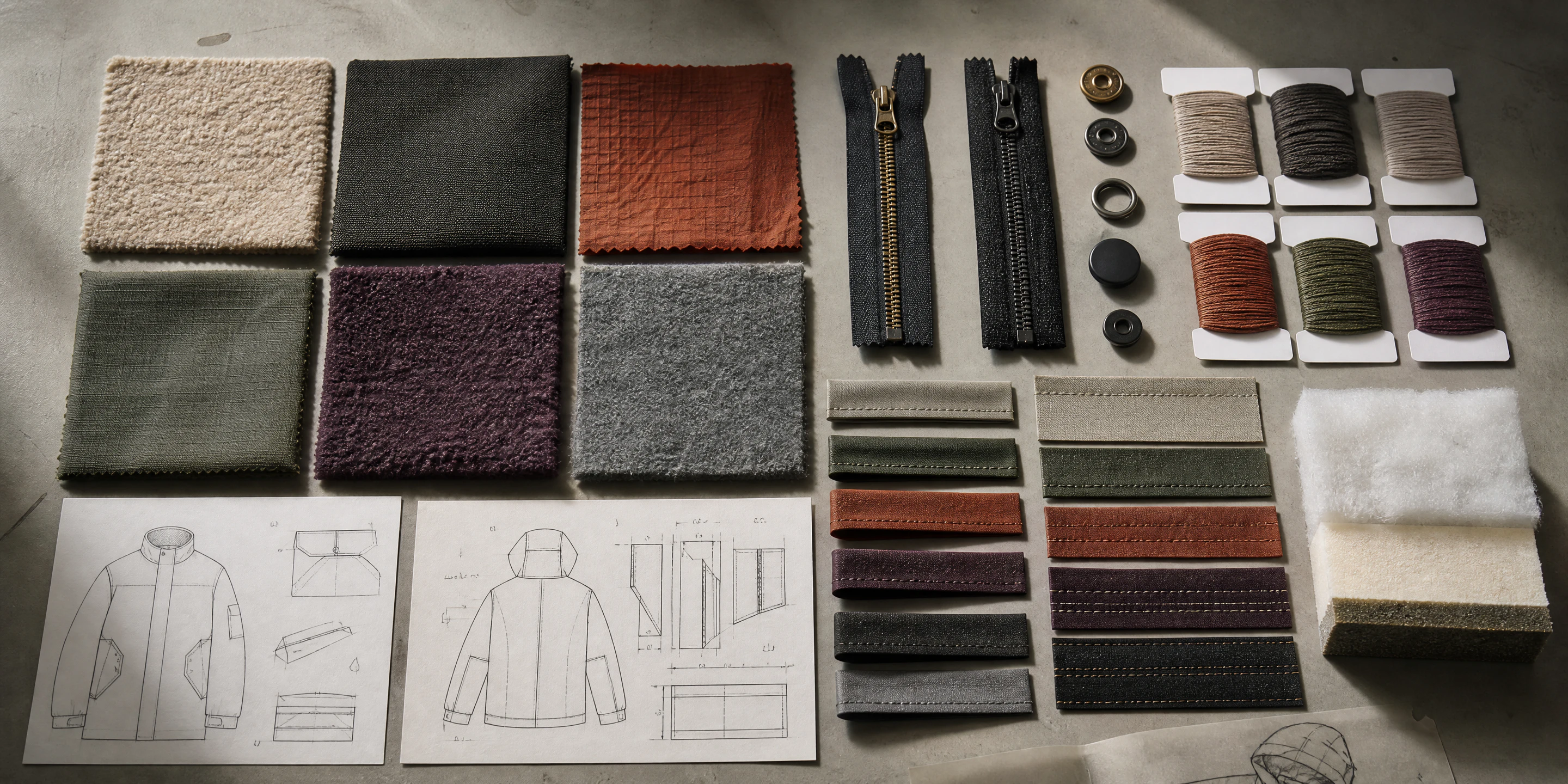
Practical methods for defining products, materials, construction and revisions.

How prototype evidence supports clear and controlled development decisions.
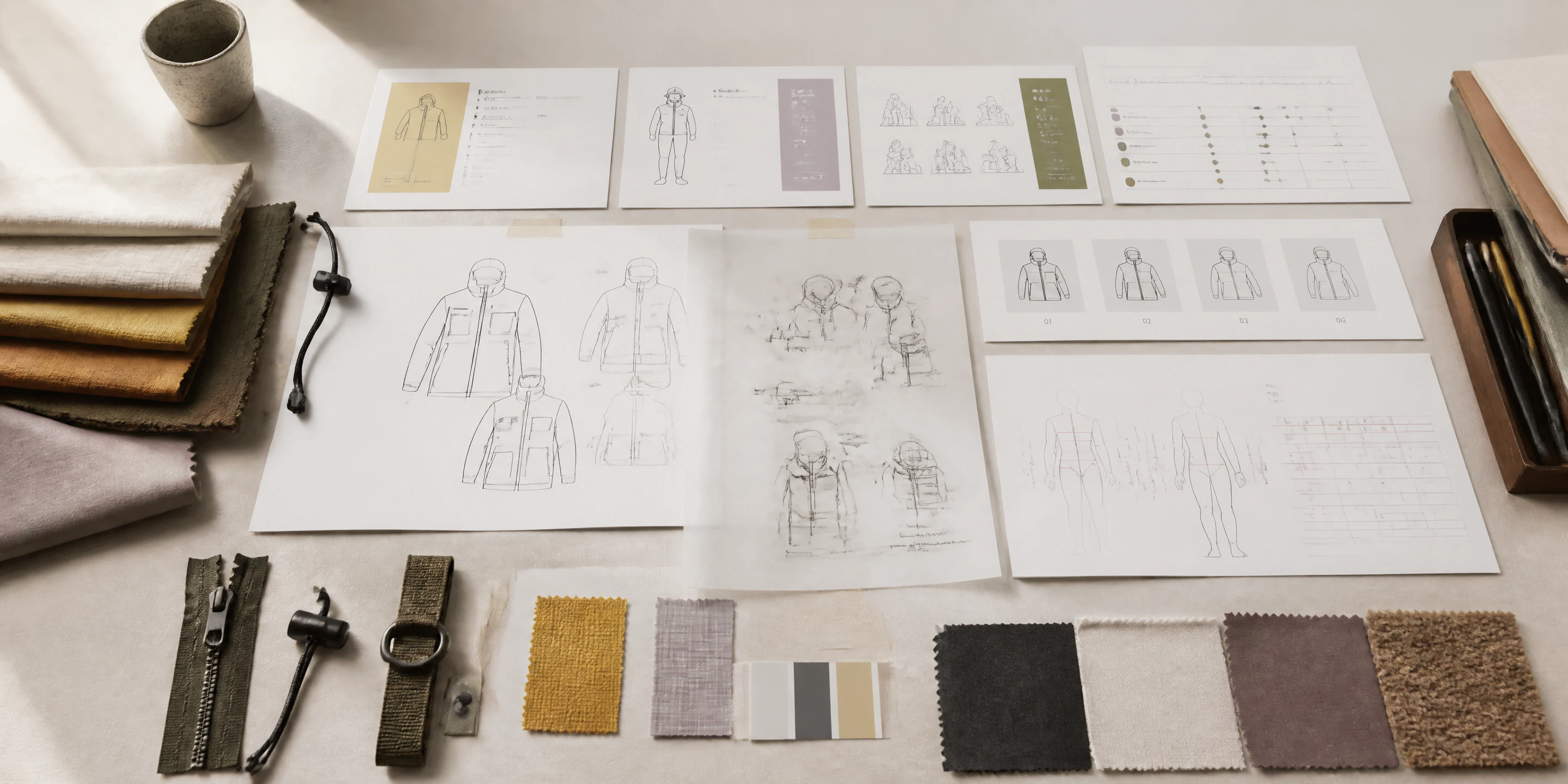
Practical methods for defining products, materials, construction and revisions.